


When you think about modern self-made success stories—people who carved their own path outside the usual corporate ladder—it’s tough not to mention Tim Ferriss.
The guy didn’t just write about hacking workweeks and life goals—he lived it, tested it, and turned it into a multi-million-dollar empire. In 2025, Ferriss isn’t just “doing well.” He’s in rare air.
Most current estimates place his net worth north of $100 million, and honestly, that tracks. Between blockbuster books, a wildly popular podcast, and some absurdly well-timed startup investments, Ferriss has stacked income streams like a seasoned player who knows the game inside and out.
Let’s walk through how he got there—and where the real money came from.
Where Things Stand in 2025

So, how rich is Tim Ferriss in 2025? According to a mix of business reports and financial sleuths, his estimated net worth sits at over $100 million, and that number might even be a bit conservative depending on how his investments are valued today.
For instance, StarsFame estimates his net worth at $120 million in 2025, attributing this to his successful investments in companies like Uber and Shopify .
Similarly, WhatInsights reports his net worth in 2024 to be between $100 to $120 million . He’s reportedly pulling in $10 million+ annually, and that cash isn’t coming from just one place. Here’s a quick snapshot:
| Category | Details |
| Net Worth (2025) | $100 million+ |
| Annual Income | $10 million+ |
| Major Revenue Sources | Book royalties, podcast ads, investments |
The Book Royalties Keep Rolling In
If you’ve walked into a bookstore—or even opened Audible—you’ve seen at least one of his titles.
Ferriss’s 4-Hour book series basically wrote the playbook for the digital nomad boom and life optimization trends. Here are the heavy hitters from his catalog:
The 4-Hour Workweek (2007)
The one that started it all. Ferriss introduced readers to “lifestyle design” before remote work was cool.
With over 1 million copies sold and translations in 40+ languages, it’s still a cash cow. Royalties from this book alone make up a meaningful slice of his annual income.
The 4-Hour Body (2010)
From rapid fat loss to sleep hacks to unconventional medical experiments, Ferriss poured his own body into this book—literally.
It made waves in the health world and became another bestseller.
The 4-Hour Chef (2012)
On the surface, a cookbook. In practice, a guide to learning anything fast. It wasn’t just about food—it was Ferriss’s take on accelerated learning.
Tools of Titans (2016) and Tribe of Mentors (2017)
Both books are loaded with bite-sized insights from people Ferriss interviewed on his podcast.
They’ve got staying power, especially among entrepreneurs, creatives, and anyone looking to level up. The takeaway? His books aren’t just informative—they’re long-term income assets.
Podcasting to the Bank

If the books built the foundation, the podcast turned Tim Ferriss into a household voice. The Tim Ferriss Show has been downloaded hundreds of millions of times and regularly ranks in the top business podcasts globally.
But it’s not just popular—it’s profitable. Sponsors are paying anywhere from $50,000 to $100,000 per episode, depending on placement and reach.
Let’s say he releases just 50 episodes a year (a conservative estimate). That’s potentially $2.5 to $5 million annually, just from the podcast.
High-Stakes Investing Is Where Ferriss Really Wins
Ferriss isn’t just a guy with opinions—he’s an early backer in some of the biggest tech names of the last 15 years. And when those bets paid off, they paid big.
Here are the ones that moved the needle:
Uber (2009)
Ferriss put in $25,000 when Uber’s valuation was just $3.7 million. That same company is now worth tens of billions. Even a tiny equity slice in that rocket ship translated into serious money.

Yes, that Facebook. Ferriss got in before the public offering. Enough said.
Shopify
He advised and invested in Shopify early, long before it became an e-commerce juggernaut.
Twitter, Alibaba, Duolingo
Other early bets that aged well. His interest in education and accessibility made Duolingo a particularly aligned choice. These investments didn’t just come from throwing money around.
Ferriss has always emphasized evaluating not just products, but founders. He looks for people who are obsessive, driven, and ethical. It’s a big part of how he filters where his money—and his reputation—go.
Business Roots & the BrainQUICKEN Exit Before Ferriss became Tim Ferriss™, he was hustling supplements online. Back in 2001, he launched BrainQUICKEN, a sports nutrition brand that generated around $40,000/month at its peak.
He ran it remotely before that idea was even mainstream. In 2010, he sold the company for somewhere between $500,000 and $1 million.
That wasn’t retirement money—but it gave him the freedom to focus on writing, investing, and chasing bigger ideas.
Philanthropy and Personal Passions
View this post on Instagram
Ferriss isn’t just chasing returns. In recent years, he’s been open about his struggles with mental health and his interest in consciousness research.
He’s donated millions to support psychedelic science—specifically studies on psilocybin and other compounds used in therapeutic settings. Some notable donations:
- $2 million to Johns Hopkins Center for Psychedelic & Consciousness Research
- $1 million to the Multidisciplinary Association for Psychedelic Studies (MAPS)
It’s part personal mission, part societal bet—and a strong sign that Ferriss isn’t just hoarding wealth. He’s placing long-term bets on culture and healing too.
His Money Philosophy (and What You Can Steal from It)
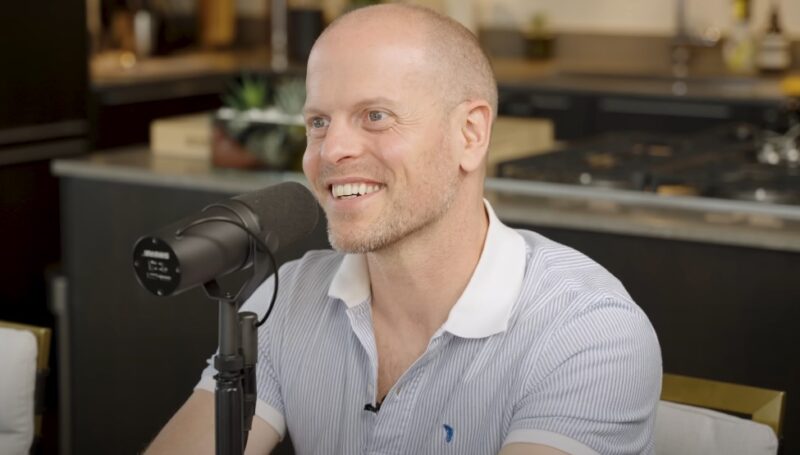
Ferriss doesn’t spend much time flexing. His financial life is guided by a few core ideas:
Work Smart, Not Forever
Ferriss built his brand around efficiency. If something can be done in four hours a week with the right systems, that’s what he aims for. He values time far more than luxury.
Bet on Yourself First
Before Uber and Facebook, Ferriss invested in his own projects. He built businesses, wrote books, made content—all things that rely on his brain and his voice. Once those foundations were solid, the investing came next.
Diversify—but With Conviction
He doesn’t just spread his money out blindly. Ferriss backs ventures he believes in and usually contributes advice and connections too. He’s not passive—he’s a strategic supporter.
Not Everything Went to Plan
Worth noting: Ferriss has had a few misses too. Shyp, for example—a once-promising shipping startup—went under, and Ferriss lost money like many other investors.
But he’s been pretty open about those failures. He views them as tuition. The goal isn’t a perfect track record—it’s a strong enough average.
Why His $100M Net Worth Feels Solid

Some estimates put Ferriss’s actual net worth closer to $150 million, depending on how his early investments are currently valued.
Either way, $100 million is a safe, conservative estimate. Between:
- Ongoing royalties from multiple bestsellers
- A top-earning podcast
- Massive exits and equity from tech startups
- A sale of his first company
- Steady media and speaking income
Final Thoughts
Tim Ferriss isn’t just rich—he’s intentional, and even Andrew Huberman said Tim changed his life. His net worth in 2025 is a reflection of smart risks, deep curiosity, and a willingness to build things that last.
The money came from many places—books, podcasts, early-stage tech plays—but the thread tying it all together is his obsession with systems, learning, and leverage.
He didn’t follow a traditional career path; he wrote his own playbook, then sold it to millions. In a world chasing hustle for hustle’s sake, Ferriss reminds people that success isn’t about grinding non-stop—it’s about working with precision, backing the right people, and knowing when to walk away.
Not bad for a guy who started by trying to automate his supplement company so he could travel to Argentina.